On Karnataka’s west coast, the sea breeze carries a sound you can’t quite name—temple bells mingling with the hum of prayer. This is Udupi, home to the beloved Shri Krishna Temple, founded in the 13th century by the saint Sri Madhvacharya.
The story goes that the idol once belonged to Rukmini in faraway Dwaraka. It travelled across waves and centuries before finding its place here. Even today, that journey feels alive in the devotion of those who come from near and far.
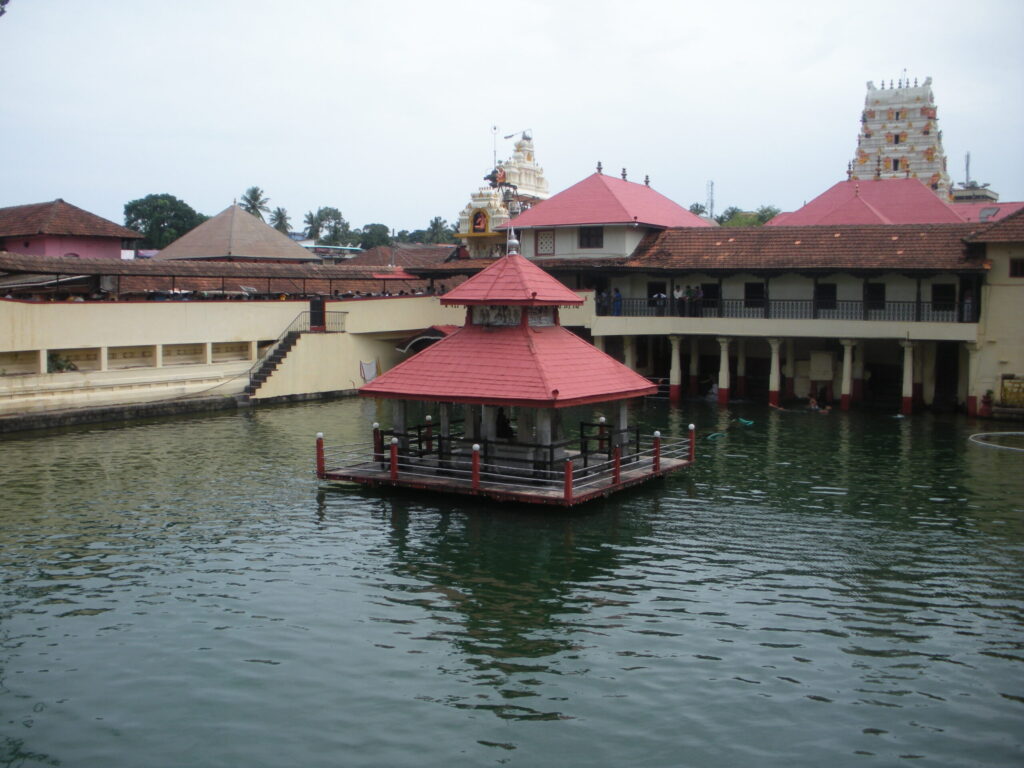
The temple isn’t grand in size, but it has a quiet dignity. Carved wooden beams, a peaceful courtyard, and the sacred Madhva Sarovara pond create an atmosphere that slows your steps. Uniquely, you don’t see Krishna head-on. Instead, you bow and look through the silver-plated Navagraha Kitiki—a small window that somehow makes the moment feel more personal.
Inside, Krishna appears as a mischievous boy holding a churning rod, a form rarely seen elsewhere. Worship follows the Dvaita Vedanta path, and eight monasteries—the Ashta Mathas—share the duty of caring for the deity, a tradition that has never broken in over 700 years.
When the Paryaya festival arrives, Udupi transforms. Streets glow with lamps, music spills into the night, and the temple becomes the heart of it all.
Udupi Shri Krishna Temple is not just a destination. It’s a living story—whispered in rituals, sung in hymns, and carried in the hearts of those who have stood before that little silver window.

S S Sneha is a postgraduate public policy scholar and historian who views India’s ancient heritage through the lens of modern governance. Specializing in public systems, she explores how Hinduism, mythology, and sacred spaces historically functioned as decentralized institutions for social administration and resource management. By unearthing the timeless narratives of regional traditions, she bridges the gap between ancient cultural legacies and contemporary policy insights. Learning from yesterday, designing for tomorrow.