सार्नन्दमानन्दवने वसन्तमानन्दकन्दं हतपापवृन्दम्।
वाराणसीनाथमनाथनाथं श्रीविश्वनाथं शरणं प्रपद्ये॥

I take refuge in Shri Vishwanath (Lord Shiva) - the divine Lord of Varanasi, protector of the helpless, and resident of the holy Anandavana (Kashi). He is the source of supreme joy and the destroyer of all sins.
In Kashi, the city as old as time itself, every narrow lane carries a secret.
Chinese pilgrim monk Xuanzang (Hiuen Tsang) was profoundly touched by its spiritual atmosphere and described it as a “center of learning” overflowing with learners, instructors, and hallowed temples. The city still echoes with the wisdom and rhythm of the lyrics that Kabir and Tulsidas wrote here, which influenced generations of devotion and reflection. One must explore the streets of Kashi if you want to really comprehend India.
As you walk through the ancient gullies of Banaras, you never really know what’s waiting for you on the other side of a door. And sometimes, that door does not open into a room. It opens into centuries of faith.
Let’s explore 5 temples of Varanasi that very few people know about!
Chandrakoopa Mahadev Temple
A well that predicts whether you’ll live beyond 6 months – built by the Moon God himself and mentioned in the Skanda Purana.
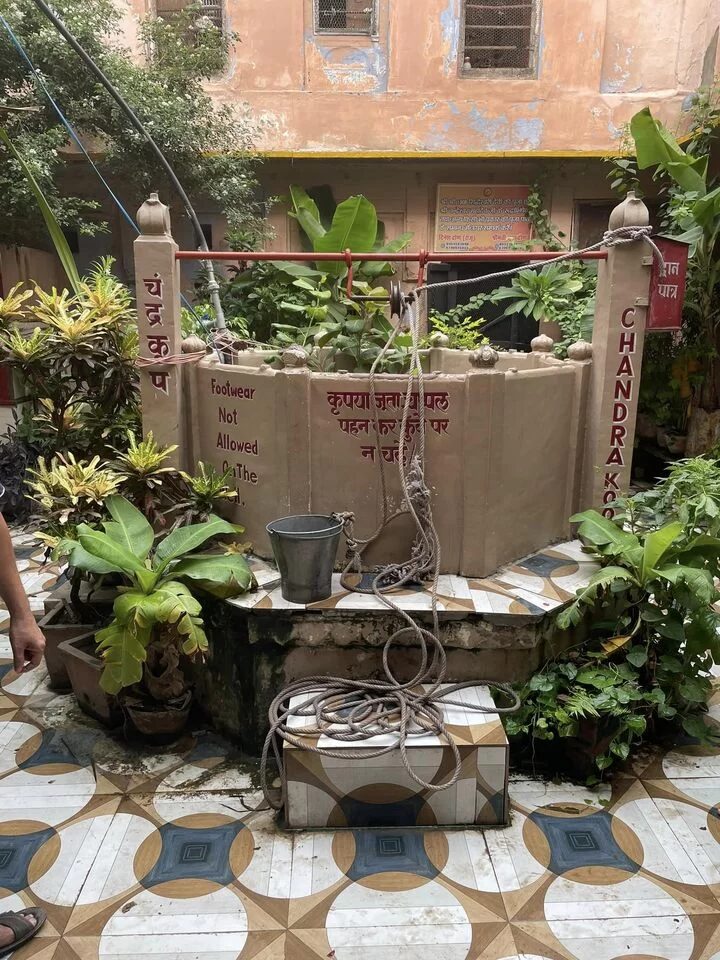
Also known as a Yoga Siddha Pitha, the temple is situated in Siddheshwari Gali of Varanasi, a narrow lane associated with Siddheshwari Devi. Shiva is said to reside here with Parvati on the nights of the full moon. Constructed centuries ago, its architecture exemplifies the devotion and craftsmanship of ancient Kashi, featuring solid stone structures, intricate carvings, and a design resilient to the passage of time. The temple is mentioned in the sacred Kashi Khand, further establishing its deep roots in the spiritual history of Varanasi.
Its historic grounds are home to the Chandra Dev mythology. The radiant Moon, who was once cursed by his father-in-law, Daksha, to forfeit all his light. As darkness threatened to consume him, Chandra turned to Lord Shiva through deep penance, seeking salvation. Moved by his devotion, Shiva chose not to revoke the curse but to transform it. The Moon would not be permanently extinguished; instead, its luminance would wax and wane, dividing the curse into cyclical phases.
Within the temple grounds are two sacred Shivlings:
One Shivling was established by Chandra Dev himself as an act of gratitude to Mahadev after liberation from the curse. The other is believed to be Swayambhu, a self-manifested Shivling that emerged spontaneously, representing divine presence beyond human intervention. When Chandra Dev established the Shivling, he performed Jalabhishek in devotion to Lord Shiva, establishing the revered Chandra Kupa well. ‘Chandra’ denotes Moon, and ‘Kupa’ signifies a well -a source created not merely for water but for worship.
It is believed that this well predates Maa Ganga’s earthly flow, making it not only an architectural marvel of ancient Kashi but also a timeless symbol of faith rooted deeper than the river itself. It is believed that the sacred Chandra Kupa stands as a symbol of this divine equilibrium, where loss is converted into rhythm and faith redefines destiny. Chandra Kupa is associated with lifespan prediction. It is said that you will pass away within six months if you are unable to see your face in a well. In the past, people would travel to Kashi and stare into this well to see themselves; if they could see their face, they would go back, but if not, they would live out their last days in Kashi because its believed that
“काश्यां मरणान्मुक्तिः।”
(काशीमें मृत्युभी मोक्षकाद्वार मानी गई है।)
In Kashi, even death is believed to be liberation
Within the temple complex, within the lanes of Kashi, devotees also worship Maa Matangi Devi, one of the Ten Mahavidyas and a formidable Tantric form of divine wisdom. Her presence, associated with higher knowledge and mystical practices, imbues the area with profound spiritual significance. Furthermore, faith in Siddheshwari Devi persists, linked to the ancient tradition of the 64 Yoginis. Mythology suggests that Siddheshwari Devi was the first Yogini to manifest on Earth, and this region of Kashi is revered as one of her earliest sacred sites. Collectively, the temple and its environs constitute a potent Shaiv-Shakta landscape, where devotion, Tantra, and Yogini traditions continue to shape the sacred identity of Banaras.
Near the sacred Chandra Kupa, especially towards its left, devotees speak of a spiritually charged raised stone platform often described as a sacred pedestal or meditation platform. Local tradition holds that beneath this platform rests the Samadhi of seven crore accomplished sages, beings who are believed to have mastered the eight Siddhis. According to tradition, the “subtle body/Sukhsm sarir , is still there, maintaining the spiritual vibrancy of the space. It is believed that if one meditates here for about thirty minutes, vibrations can begin to be felt within the body.
Mahamrityunjaya temple
The God of Medicine buried his entire treasure here — and the water still carries its power!
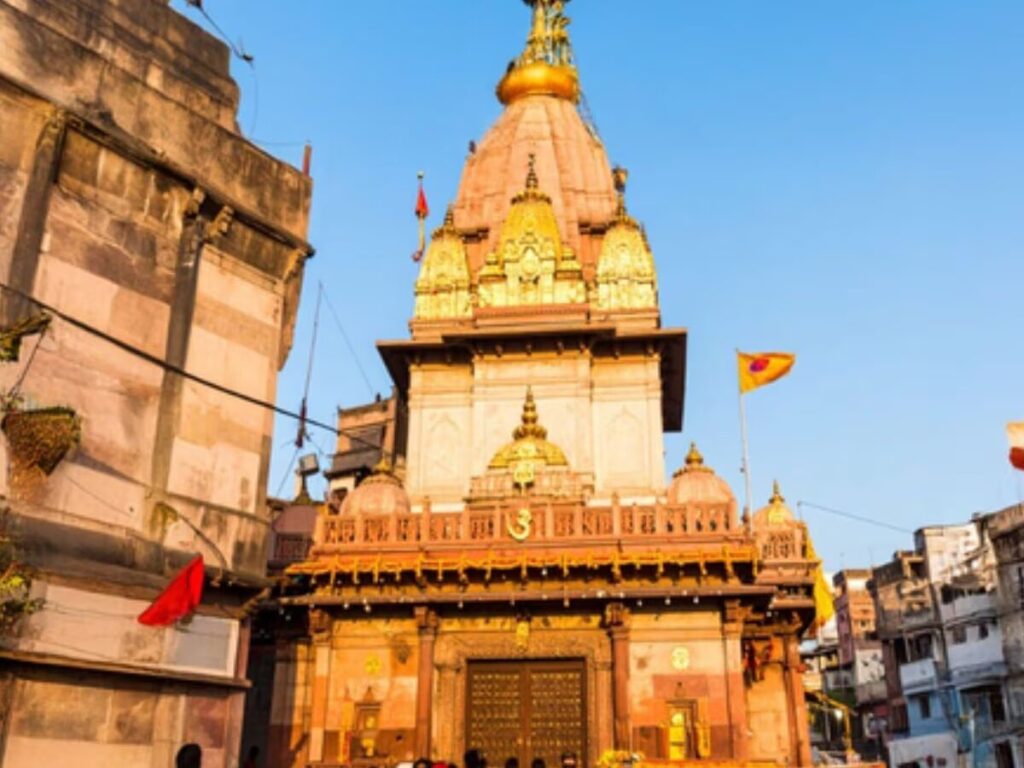
The meaning of “Maha Mrityunjay” is – the One who conquers untimely death, highlighting Lord Shiva’s role as the divine protector who safeguards devotees from premature demise and guides destiny through grace.
Within this sacred temple, devotees also honour Markandeya Mahadev, whose story is beautifully rooted in Hindu scriptures. Legend tells us that Markandeya was destined to live only sixteen years. When Yama, the god of death, came to take him, the young boy, innocent and unaware of fate’s finality, clung tightly to a Shivling and chanted the Maha Mrityunjay Mantra with unwavering faith.
This powerful mantra is believed to have the incredible ability to transform even the moments approaching death. Moved by Markandeya’s unwavering faith, Lord Shiva stepped in to protect him and changed his fate. The story beautifully illustrates the deep spiritual belief behind the Maha Mrityunjay Mantra that genuine devotion can reshape destiny, help overcome fear, and even transcend death itself.
Within the temple complex, you’ll find the sacred Dhanvantari Koop, an ancient well revered for its healing properties and divine medicine. According to local legends, Dhanvantari, the divine physician and an incarnation of Lord Vishnu, once journeyed through this area carrying a pouch filled with sacred herbs and medicinal potions. Legend says that the pouch accidentally fell right here, turning this spot into a place of extraordinary spiritual and medicinal significance. Devotees believe that the water from Dhanvantari Koop carries healing vibrations. Many come here with faith, especially those struggling with serious or chronic illnesses, trusting that drinking this sacred water may bring relief and renewal.
Architecturally, the well is supported by eight sturdy pillars, which symbolically represent the protective arms of Lord Shiva, adding both spiritual meaning and unique beauty to the structure.
Lokark kund
A sun-blessed kund where one dip is said to open the doors of parenthood
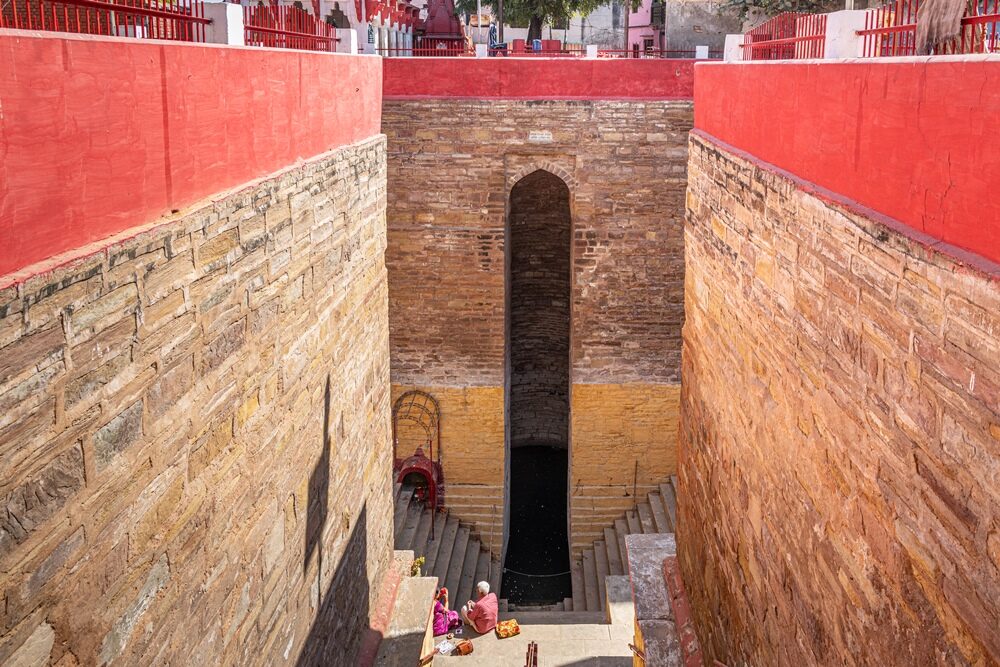
The stepwell-like tank is rectangular, deep, and flanked by steep stone steps on all sides. The water level sits far below ground level. Its arrangement seems artistic and symbolic, as though devotion too must descend in submission until rising in grace once more. During the Shukla Paksha of the month of Bhadrapada, when the magnificent festival of Lolark Shashthi, also called Surya Shashthi and Skanda Shashthi, is celebrated, Lolark Kund is of great spiritual significance. The Garga Samhita adds scriptural depth to the site’s significance by stating that this fortunate day is thought to be the birth of Balarama.
Particularly well-known are the kund’s Child-related ceremonies. Couples come here with faith and resolve to receive blessings for childbirth. As a sign of their devotion and sacrifice, they make a solemn pledge to abstain from one particular fruit for the rest of their lives and then take a sacred dip. They abandon their old clothes after the ceremonial bath, signifying the letting go of previous hardships and the return with the expectation of divine favour.
According to Puranic mythology, Surya’s celestial chariot’s wheel fell here during a bloody fight between Deva and Asura. The soil sank as a result of the collision, creating this hallowed kund, which is a space formed by supernatural intervention rather than just an architectural construction. As a result, Lolark Kund is a timeless example of Kashi’s religious heart, combining solar worship, sacred architecture, mythology, and ongoing ritual practice. In this way, Lolark Kund does not simply preserve the past but is where solar worship, sacred architecture, ancient mythology, and living ritual converge into a tradition.
Ratneshwar temple
More tilted than the Leaning Tower of Pisa, and it’s been standing in Varanasi for centuries!
Kashi Karvat is home to the beautiful Ratneshwar Mahadev Mandir, a truly remarkable architectural wonder. While we often admire the Leaning Tower of Pisa for its tilt, this temple is even more inclined, leaning at nearly nine degrees compared to Pisa’s four.
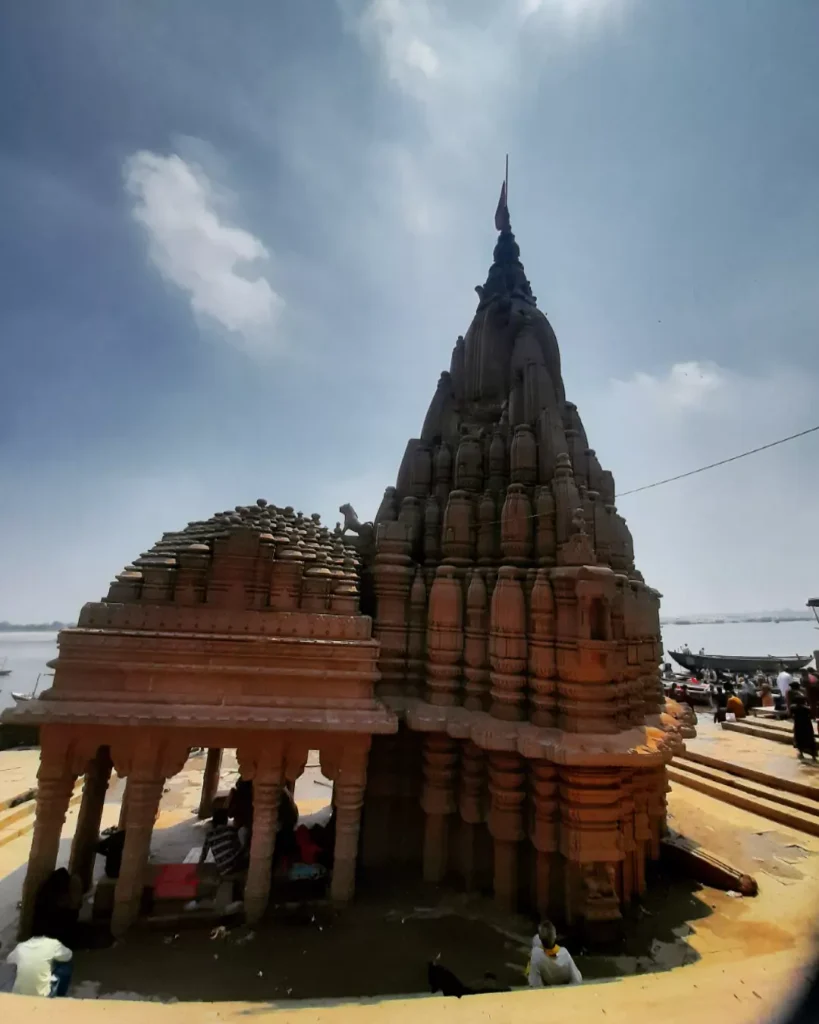
Historically, the temple was built by a devoted attendant of Raja Mansingh, who crafted it to honour his mother, hoping to repay her sacred debt. Though emotionally, no one can truly be free from a mother’s debt, it’s said that this belief might have caused the temple’s tilt, adding a poetic touch to its story of faith and destiny.
There’s another charming story about the temple’s origins- it is believed to have been built by Ratnavati, a faithful attendant of Ahilyabai. Despite facing centuries of weather and even lightning in recent years, the temple continues to stand strong, often partially submerged in water during floods. This resilience showcases the incredible craftsmanship of the builders of that era.
Close by is Manikarnika Kund, a sacred water body thought to have been formed from Lord Vishnu’s meditation, which is believed to have lasted sixty thousand years. This sacred site is deeply connected to the spiritual fabric of Varanasi. The nearby cremation grounds reflect the city’s unique blend of life and liberation. The enchanting riverfront of Varanasi, dotted with ghats and temples, has earned a spot on the UNESCO Tentative List of World Heritage sites, promising a bright future of recognition and preservation.
Gurudham temple
A temple so breathtakingly beautiful
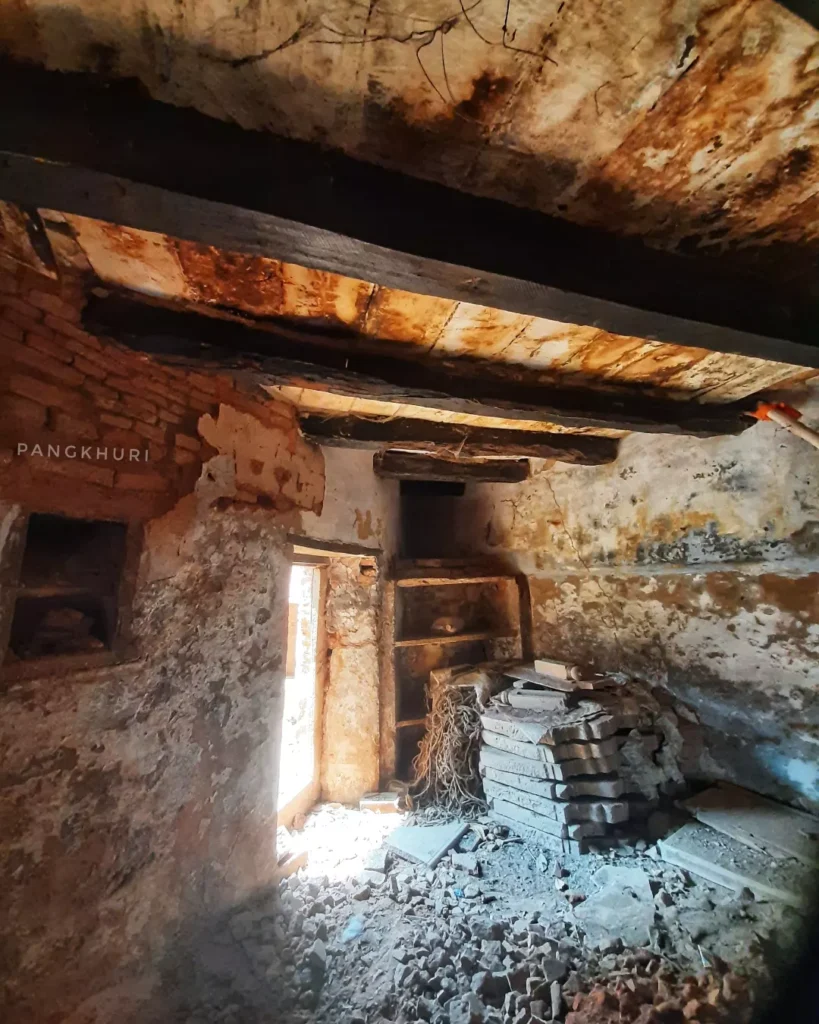
When we talk about the heritage of Kashi, there is one more legacy that quietly stands among them – a temple that is around two hundred years old, dedicated to the Guru. It is known as the Gurudham Temple. The Gurudham Temple is more than just a building. It was built by Raja Jai Narayan Ghoshal in 1814 CE. The entire design reminds us of a Tantric mandala. This is a representation of the seven chakras in the human body.It represents a cosmogram, a sacred diagram that shows the connections
between body, space, and the universe, and is depicted in the temple. The actual construction is octagonal and has 8 entrances. Here, all the architectural features have deeper significance. The temple’s design reflects the kundalini’s ascent, the seven chakras in yogic philosophy. To symbolise spiritual perfection, the devotee rises and finally bows at the Guru’s feet.
But today, very few people in Kashi truly know about this temple or its deeper meaning. Perhaps one reason is that its maintenance has remained at a very poor level. Because of this neglect, such an important part of Kashi’s spiritual heritage slowly faded from public awareness.
In Kashi, the phrase “Kankar-kankar mein Shankar” is frequently used. That there is Shiva in all stones. Perhaps this is the reason Varanasi is a living archaeological text rather than just a holy city. Every shrine, every secret mandir, and every carved pillar bears layers of faith, past devastation, renovation, and unwavering dedication. It lives in stones that have seen centuries, breathes in abandoned courtyards, and rests in silent sanctums.
Har Har Mahadev!

Pangkhuri Kumari holds a Master’s degree in Modern Indian History from Banaras Hindu University (BHU) and is currently pursuing further studies. She has qualified for the UGC-NET examination six times. Her research interests include women’s awareness movements and the prison writings of Indian freedom fighters, as well as jail narratives. Alongside her academic pursuits, she is also a content creator who actively engages in simplifying historical narratives for a wider audience. She aims to contribute meaningfully to historical scholarship.