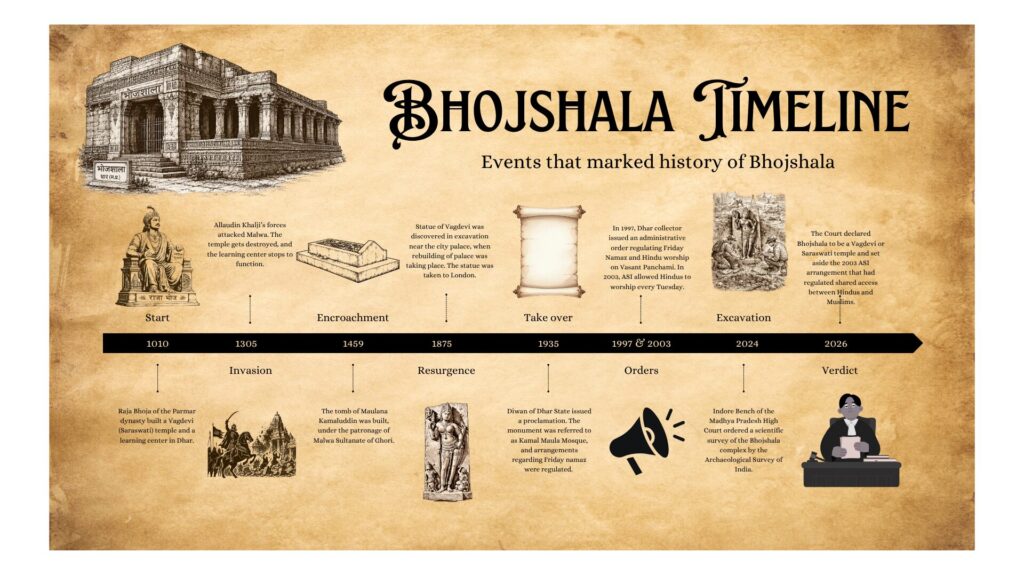
On May 15, the Indore Bench of the High Court delivered its landmark verdict on the Bhojshala–Kamal Maula Mosque dispute in Dhar. And since then, I have been receiving many messages asking me to talk about the history of the complex. So today, on special request from my subscribers, I will share the timeline of the Bhojshala controversy in Dhar, Madhya Pradesh.
The start, rise and decline
Raja Bhoja and the origin of Bhojshala
It all began more than 1000 years ago. That is almost 650 years before the Taj Mahal was built, and even before many famous universities of Europe were established.
Around 1000 years ago, the Malwa region was ruled by Raja Bhoja of the Paramara dynasty. The city of Dhar was one of the major centres of the Paramara dynasty, to which Raja Bhoja belonged. Raja Bhoj is remembered not only as a ruler, but also as a patron of Sanskrit learning, philosophy, architecture, literature, and scholarly traditions.
During this broader period, Nalanda was among the most prominent centres of learning in the world and attracted scholars from different regions. In medieval India, kings often competed not only through military power, but also through culture, scholarship, and intellectual prestige. Raja Bhoja may have taken inspiration from the university at Nalanda, to establish one learning center in his own kingdom. Many traditions associate Raja Bhoja with the establishment of a major centre of learning in his kingdom, connected with Saraswati worship. This centre later came to be known as Bhojshala.
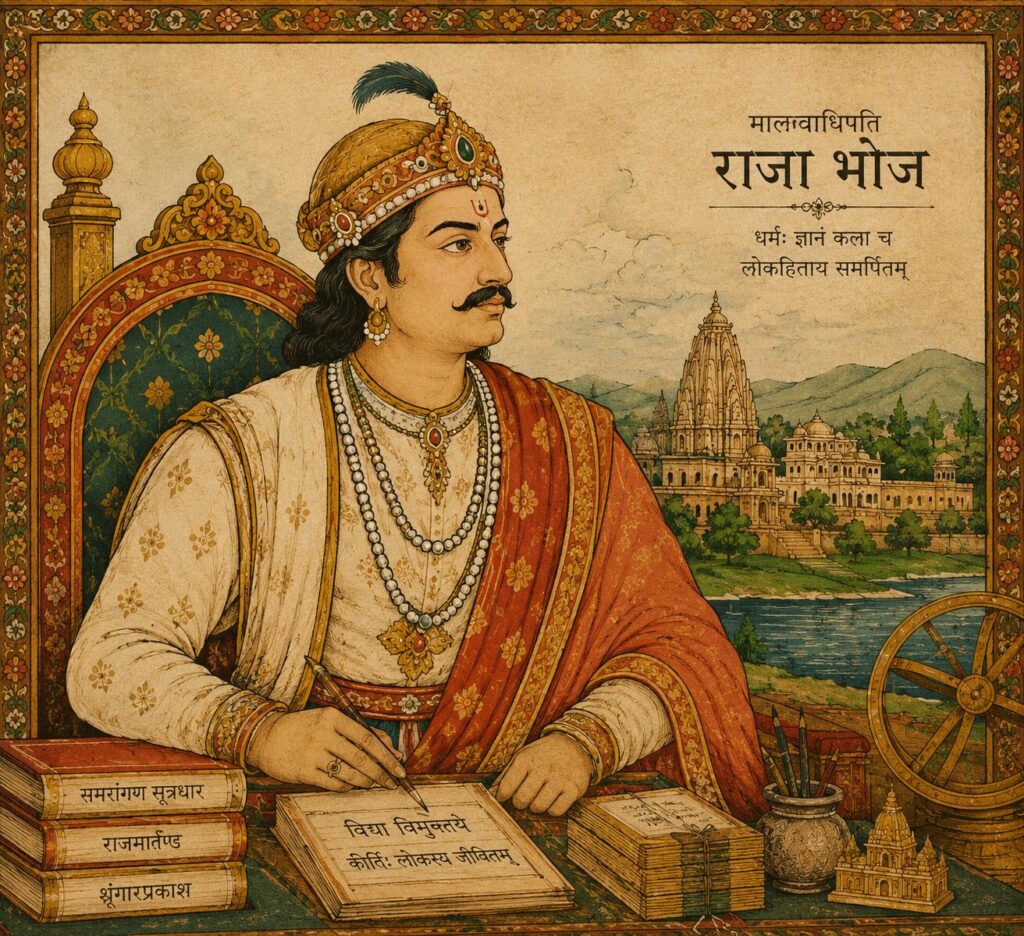
This was around the period between 1010 and 1055 CE. The word “Shala” means a place of learning or school. And because the institution was associated with Raja Bhoja, it became known as Bhojshala.
Although Bhojshala is primarily remembered as a centre of Sanskrit learning and Saraswati worship, the broader intellectual culture associated with Raja Bhoja suggests that multiple disciplines such as philosophy, grammar, astronomy, architecture, literature, and related sciences may also have been studied there.
The Invasions and the Decline of the Institution
The learning center acted as a lighthouse to many scholars and students for almost two centuries. But the political landscapes started to change. In the year 1290, Khalji dynasty established their kingdom, with their capital at Delhi. In 1296, Alauddin Khilji became the Sultan of Delhi. And he started to attack the kingdoms in western and central India. He started from Gujarat in 1299. We all have heard how he looted and dismantled the temple of Somanath in his raids. Jaisalmer, Ranthambore and Chittor too succumbed to his force. And then, his army moved towards Malwa. In the year 1305, Allaudin Khalji’s forces attacked Malwa and defeated the kingdom. The king at the time, Mahalakdeva, took shelter in the Mandu fort. The minister Gogadev fought to his best abilities, but was ultimately defeated. Gogadev was killed in the battle and Khiji’s army took over the kingdom. Alauddin appointed Ayn al-Mulk Multani as the governor of Malwa. After consolidating his power in Malwa, Ayn al-Mulk besieged Mandu and killed Mahalakadeva.
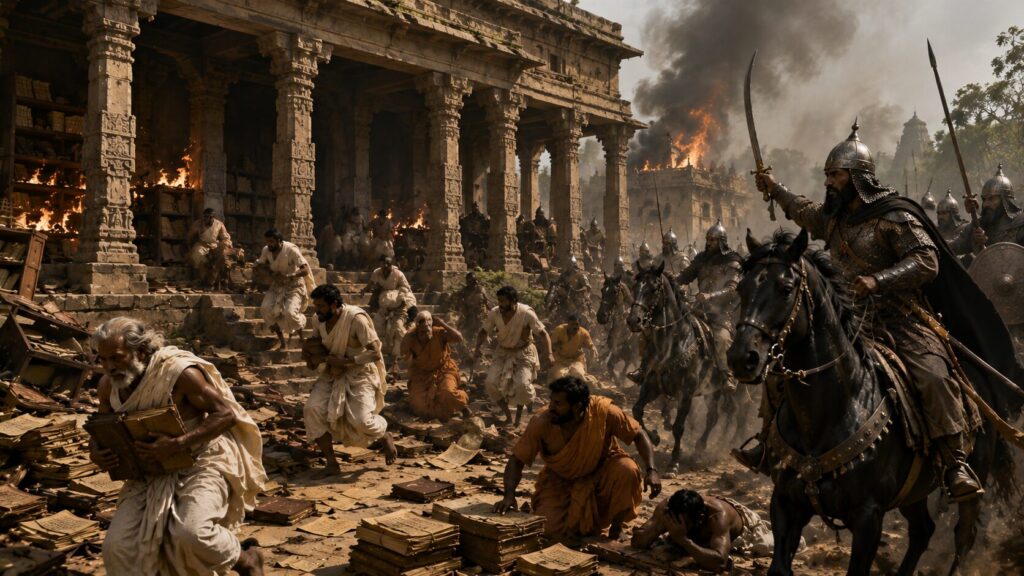
This war finds mention in the writings of contemporary writer Amir Khusro, and later historians Yahya, Firishta, and Hajiuddabir. The political upheaval deeply affected older temple and learning traditions associated with the region. The Bhojshala complex suffered destruction and disruption during this period. The army of Khailji also dismantled the iron pillar at Dhar, fragments of which are now kept in Lal Masjid in Dhar. The existence of the iron pillar in Dhar, and an ancient observatory in Ujjain tells us that the Parmara rulers were patrons of astronomy research.
The neglect in medieval period
The Malwa Sultanate and the Emergence of New Identities
In year 1390, Dilawar Khan Ghori was made the governor of Dhar region by the Delhi sultan. The Delhi sultanate had now become very weak. And taking benefit of this political scene, in 1401, Ghori declared the region to be an independent Sultanate and made himself the sultan. Dhar became capital of this newly formed Malwa sultanate. The Sultanate ruled for 130 years, until the year 1531. The old learning traditions associated with Bhojshala gradually faded away under the changing political order. Little to no efforts were made, to retrieve the Bhojshala complex. On the contrary, a tomb and mosque was built up at the site of the learning center. The tomb of Maulana Kamaluddin was built here in the year 1459. This tomb and mosque later became the center of controversy in the coming times.
For nearly two centuries, Bhojshala had stood as a centre of learning. But the invasions of the 14th century changed the fate of the institution forever.
Bhojshala During the Maratha and British Periods
In the year 1723, the Marathas expanded strongly into the Malwa region under the leadership of Bajirao Peshwa, the Prime Minister of the Maratha ruler Chhatrapati Shahu. He established the Dhar state, with Udaji Rao Pawar as the ruler. Neighboring Gwalior state under Shindes or Scindias; Jhansi state under Newalkars and Indore state under Holkars were also established along with Dhar. In later history, states such as Gwalior, Indore, and Jhansi became much more widely discussed. Dhar, however, remained comparatively less remembered despite its deep historical connections with the Paramara period and Raja Bhoja. After the third Anglo Maratha war of 1818, the state become part of the British empire.
Maratha rulers across India are known to have supported the restoration and revival of several ancient temples and pilgrimage centres. In places such as Kashi, Ujjain, Somnath, and other important religious sites, we do find examples of reconstruction, patronage, or revival efforts associated with Maratha rulers and nobles.
However, in the case of Bhojshala, we do not find major documented evidence of a large-scale restoration or revival attempt during the Maratha period. And because of this, the Bhojshala complex continued to exist in a layered and altered form even into the colonial era.
The resurrect
Rediscovery of the Vagdevi Idol
More than 4 centuries had passed now, since the attack by Khilji. From the rise of the Malwa Sultanate in the late 14th century to the British period in the 19th century, nearly 15 to 20 generations had gone by. Over time, memories connected with the older Bhojshala traditions had gradually faded from wider public consciousness.
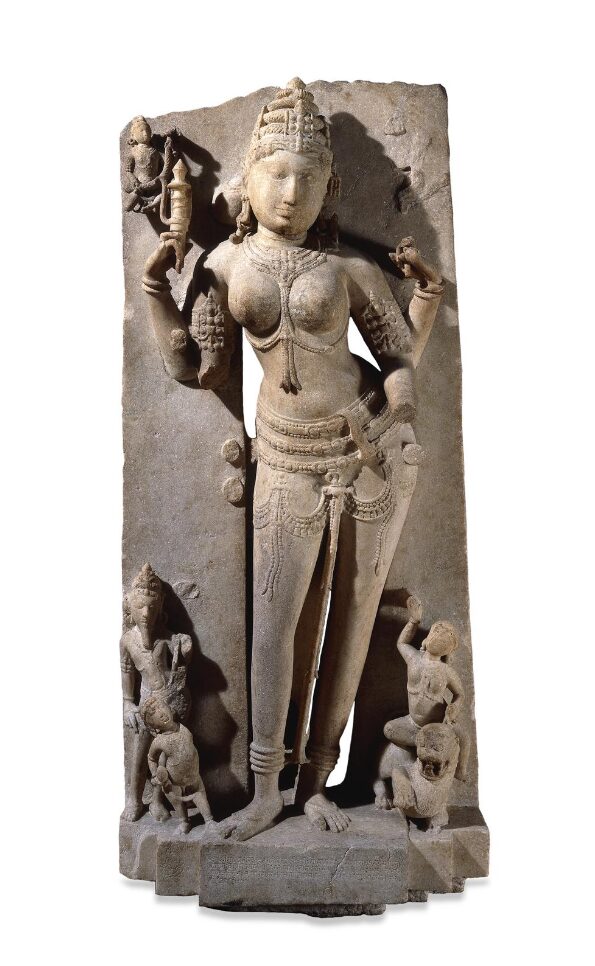
But things were about to change now. And they did. The year was 1875. Major General William Kincaid was the assistant political agent of Bundelkhand region at that time. He took up excavation and clearing work in the city palace debris of Dhar. During these activities, a four-foot, 250-kilogram seated stone statue of the goddess Vagdevi (Saraswati) was discovered. What made this discovery especially important was the inscription carved on the idol itself.
The inscription provided very important details about the time when the statue was created. The inscription mentions the Bhoja Narendra or King Bhoja established the statue of Vagdevi or Saraswati. Later, a statue of Amba was made by Vararuchi. The name Vararuchi may currospond to Dhanpala, a prominent author who was a very prominent part of Bhojraja’s court.
This rediscovery became one of the most important developments in the modern history of Bhojshala because it revived historical interest in the site and strengthened the association between Bhojshala, Raja Bhoja, and Saraswati worship.
A few years later, in 1880, the idol was taken to Britain during the colonial period. Today, the Vagdevi idol is associated with museum collections in London, and even now, many people continue to demand its return to India.
Protected Monument Status and Archaeological Control
In the year 1909, the Dhar State administration implemented the provisions of the Ancient Monuments Preservation Act of 1904 and issued a gazette declaring Bhojshala a protected monument.
This was an important turning point in the history of the complex. Once a monument comes under archaeological protection, it is no longer treated only as a religious structure. It also becomes part of officially managed heritage. And that is exactly what started happening with Bhojshala during the colonial period.
The declaration meant that major alterations, reconstruction, or modifications at the site could no longer be carried out freely. Activities connected with the monument increasingly came under administrative regulation and government supervision.
At the same time, archaeological authorities and surveyors also gained greater control over documentation, preservation, and maintenance of the structure. In many ways, this laid the foundation for the later involvement of archaeological departments, administrative regulations, ASI control, and eventually the modern legal disputes surrounding Bhojshala.
The 1935 Elan and Administrative Regulation
By the early 20th century, the monument had already started carrying multiple identities simultaneously. Archaeologists and historians had begun associating the site with Bhojshala and the traditions connected with Raja Bhoja and Saraswati worship. At the same time, the Kamal Maula mosque tradition had also become firmly associated with the complex over centuries. In this background, an important administrative development took place in 1935. The Diwan of Dhar State issued what later became known as Elan No. 973. In this proclamation, the monument was administratively referred to as Kamal Maula Mosque, and arrangements regarding Friday namaz and usage of the site were formally regulated. However, despite this proclamation, the older Bhojshala traditions connected with Saraswati worship and Raja Bhoja continued to survive in public memory and local belief.
Rising Tensions in the 20th Century
In 1944, first Urs of Maulana Kamaluddin Chishti was held at the site. This also paved way for the first recorded communal flare-up in Dhar. Post India’s independence, in the year 1952, the Hindus held Bhoj Utsav on the occasion of Basant Panchami. Basant Panchami is the festival associated with goddess Saraswati, and that is why the day was chosen for the celebration of King Bhoja’s legacy.
After independence, the monument eventually came under the control of the Archaeological Survey of India. For several decades, the issue remained relatively localised. But the situation began changing significantly during the 1990s. On 23 May 1997, the Collector of Dhar issued an administrative order regarding religious access at the Bhojshala complex.
Under this arrangement, Friday namaz was formally regulated under administrative supervision. Hindu worship, however, remained largely restricted to specific occasions such as Vasant Panchami. This order became controversial and increased tensions around the site.
The issue became even more significant because Vasant Panchami is associated with Goddess Saraswati, and Hindu organisations increasingly demanded broader worship rights at Bhojshala.
2003 Arrangement by ASI
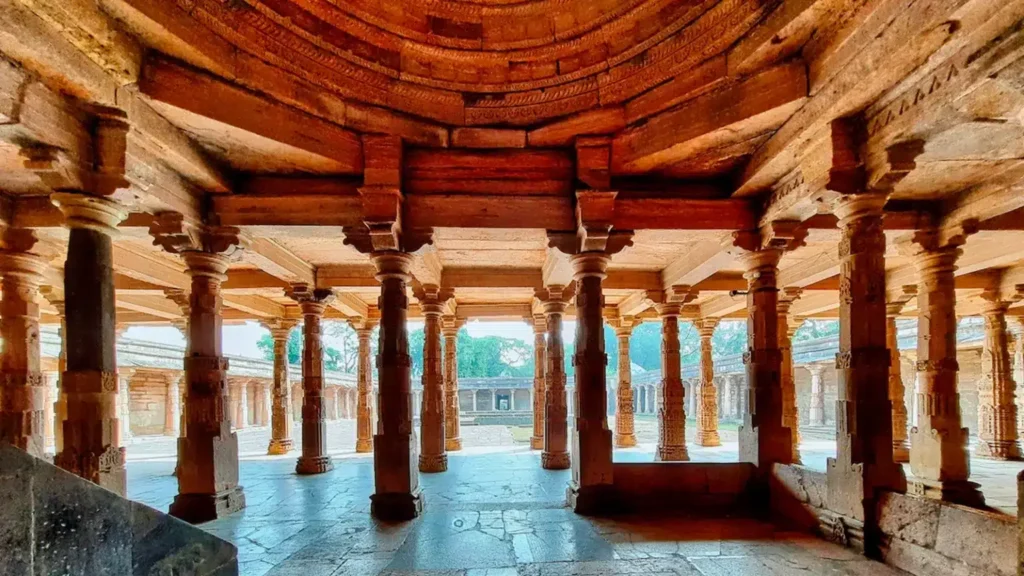
The next major development came on 7 April 2003. On this date, the Archaeological Survey of India introduced a formal administrative arrangement for the monument. According to the 2003 ASI arrangement: Hindus were permitted worship on Tuesdays, Muslims were permitted Friday namaz. This arrangement remained in effect for more than two decades and became the operational framework for managing the site.
However, disputes continued regularly, especially during years when Vasant Panchami coincided with Friday prayers. During such occasions: security deployment increased, access timings became controversial, and administrative negotiations often took place.
ASI Survey and recent court case
Over time, several petitions and legal proceedings were filed regarding: the identity of the structure, worship rights, archaeological interpretation, and historical continuity. One of the most important petitions was filed by the Hindu Front for Justice, represented by petitioner Ashish Goyal.
The petitioners argued that: Bhojshala was originally a Saraswati temple and centre of learning, many architectural elements inside the structure were clearly temple-related, sculptural remains and Sanskrit inscriptions supported the temple claim, and the 2003 ASI arrangement unfairly restricted Hindu worship.
The Muslim side opposed these claims and argued that: the structure had functioned as Kamal Maula Mosque for centuries, Friday namaz had historical continuity, and administrative arrangements dating back to the princely state period recognised mosque usage.
A major turning point came in March 2024. On this date, the Indore Bench of the Madhya Pradesh High Court ordered a scientific survey of the Bhojshala complex by the Archaeological Survey of India. The Court directed ASI to conduct: excavation, architectural study, mapping, inscription analysis, and scientific documentation of the monument.
This survey continued for approximately 98 days. During the survey, ASI reportedly documented: reused temple fragments, Sanskrit inscriptions, sculptural remains, carved pillars, deity-related iconography, and architectural elements associated with earlier non-Islamic structures.
The survey immediately became a major national topic. Supporters of the temple claim argued that the findings supported the long-standing belief that Bhojshala was originally a Saraswati temple and learning centre associated with Raja Bhoja. Meanwhile, Muslim organisations questioned the interpretation of the findings and argued that archaeological observations alone could not erase centuries of mosque usage and historical continuity.
The hearings continued through 2024, 2025, and into 2026. Arguments before the Court involved: historical records, inscriptions, ASI reports, administrative orders from 1935 and later years, questions regarding protected monument status, and the legality of the 2003 ASI arrangement.
2026 Judgement
Finally, on 15 May 2026, the Indore Bench of the Madhya Pradesh High Court delivered its landmark verdict. The Court declared Bhojshala to be a Vagdevi or Saraswati temple and set aside the 2003 ASI arrangement that had regulated shared access between Hindus and Muslims. The verdict was welcomed by Hindu organisations and devotees associated with Bhojshala traditions. Meanwhile, Muslim organisations and bodies connected with the Kamal Maula Mosque side stated that they would challenge the judgment further in higher courts.
And that is where the Bhojshala controversy stands today — a monument that began as a centre associated with learning and Saraswati worship, later carried layers of political and religious change, and eventually became one of the most debated heritage disputes in modern India.

Dinesh is an an indologist and is writer of 18 books. He holds a doctorate in cultural studies. He is felicitated by Acedemia Sinica, Taipei, Taiwan for his research in mythology. He has received numerous awards including the Lokmat Digital Influencer Award (Heritage). Dinesh is also a speaker who has graced many occasions. He is the main admin of Indian.Temples.