
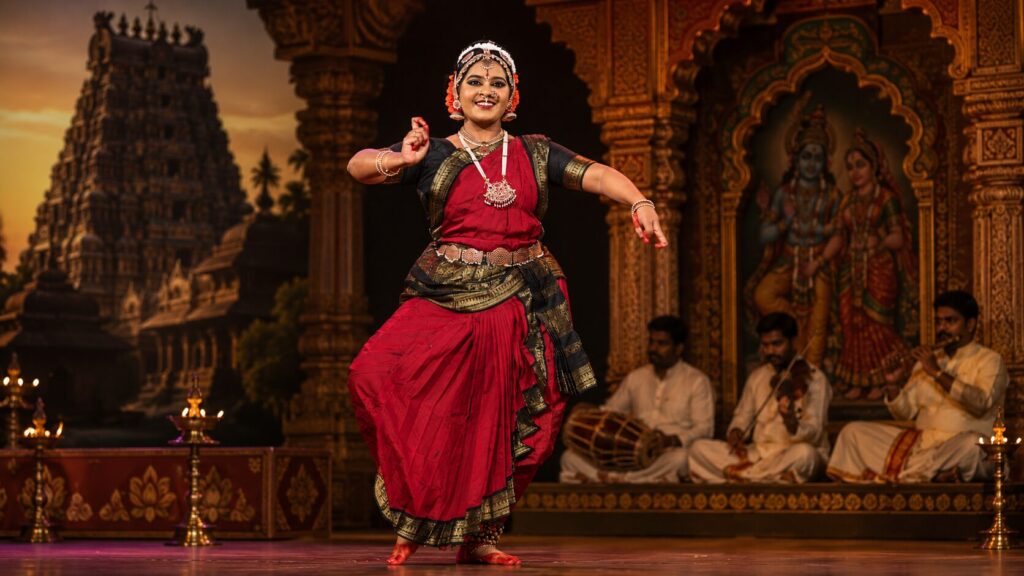
Kuchipudi, one of India’s most vibrant classical dance traditions, is celebrated for its captivating storytelling through movement, music, and expression. Originating from the village of Kuchipudi in Andhra Pradesh’s Krishna district, the dance form derives its name from its birthplace. Over centuries, it has evolved into a rich artistic tradition that seamlessly blends dance, drama, rhythm, and emotion, enchanting audiences across generations and geographical boundaries.
Kuchipudi emerged as a distinct dance-drama tradition during the seventeenth century, a period marked by the flourishing Bhakti movement across India. This devotional movement sought to make spiritual teachings accessible to the masses through music, poetry, dance, and theatrical performances. Within this cultural atmosphere, Kuchipudi evolved as a powerful medium for communicating religious narratives and philosophical ideas through a harmonious blend of dance, drama, music, and literature.
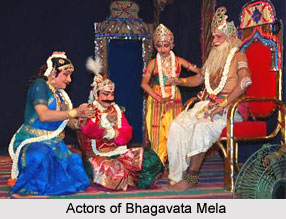
Before it came to be widely known as Kuchipudi, the tradition was often referred to as Bhagavata Mela Natakam, as most of the performances were based on stories from the Bhagavata Purana and other devotional texts. Unlike several classical traditions associated with temple rituals, these performances were usually staged in open spaces, village streets, or temporary platforms during festive occasions. Presented through the night and often continuing until dawn, the performances combined music, dialogue, dance, and dramatic enactment to entertain as well as educate audiences on moral and spiritual values.
Traditionally, the Kuchipudi dance-drama tradition was practiced exclusively by the Brahmin men and boys of the village. Trained rigorously in dance, music, acting, and recitation, they portrayed both male and female roles in the performances. These performers, known as Bhagavatulu, regarded the art not merely as entertainment but as a sacred offering and a medium for spreading devotion. Over time, however, Kuchipudi gradually transcended the boundaries of caste and gender, welcoming practitioners from diverse backgrounds, including women performers who later played a crucial role in popularizing the art form globally.
The principal architects of the Kuchipudi tradition were Siddhendra Yogi and Narayana Teertha, who brought together music, dance, and drama to communicate the devotional and philosophical essence of the epics and Puranas. Narayana Teertha’s Sri Krishna Leela Tarangini, inspired by the devotional poetry of Jayadeva’s Gita Govinda, later became one of the important literary sources for Kuchipudi dance dramas.
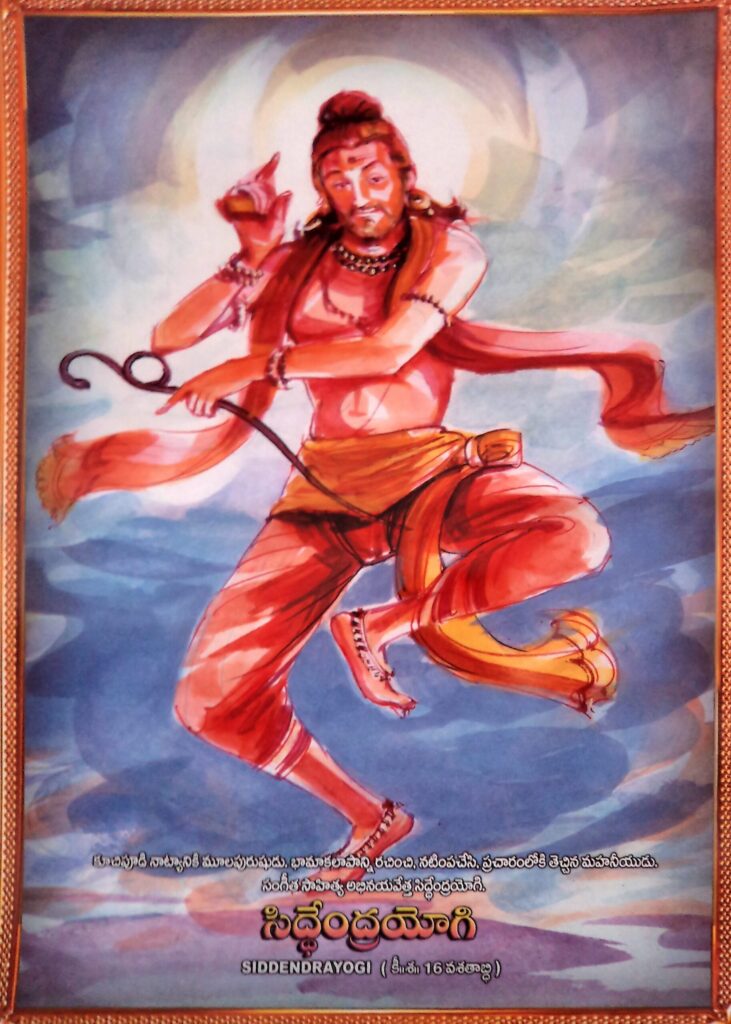
Siddhendra Yogi, often regarded as the creator and reformer of Kuchipudi, is believed to have formalized the dance-drama tradition through his composition Parijatapaharam also known as Bhama Kalapam. He trained Brahmin boys of the village to perform the dance drama and established a hereditary tradition that continued across generations.
The foundations of the Kuchipudi dance tradition were laid and nurtured during the Vijayanagara period. The art form flourished under the patronage of various rulers, most notably Abul Hasan Qutb Shah, popularly known as Tanasha, the Nawab of Golconda. According to tradition, after witnessing a performance of Bhama Kalapam, he was deeply impressed and granted the village of Kuchipudi to the performing Brahmin families around 1675. Since then, nearly fifteen to sixteen hereditary families, including Vedantam, Vempati, Chinta, Bhagavatula, Pasumarthi, Mahankali, Yeleswarapu and few others have played a vital role in preserving and propagating the tradition.
Apart from the classical dance-drama tradition, the village is also associated with other branches such as Kuchipudi Yakshagana and Pagati Veshalu. While Yakshagana represents an elaborate theatrical form integrating music, dance, dialogue, and characterization, Pagati Veshalu involved daytime impersonations and satirical performances that combined entertainment with social commentary.
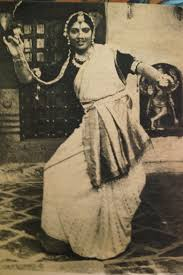
Kalapams are dance-dramas in which the narrative unfolds through dialogues, music, dance, and dramatic interaction between the characters. Among them, Bhama Kalapam occupies a unique and celebrated place in the Kuchipudi tradition. The story revolves around Satyabhama, the proud and possessive consort of Lord Krishna, who compels him to bring the divine Parijata tree and plant it in her garden, after he offers one of its flowers to Rukmini. What follows is an engaging sequence of jealousy, pride, quarrel, separation, and eventual reconciliation, often facilitated by Madhavi, the sakhi or confidante. Filled with satire, wit, humour, and expressive abhinaya, Bhama Kalapam remains one of the greatest masterpieces of Kuchipudi. For generations, performers have aspired to portray the role of Satyabhama, considered one of the most challenging and rewarding characters in the tradition. Beyond its theatrical brilliance, the dance drama subtly explores themes of love, devotion, ego, pride, and reconciliation.
In contrast, Golla Kalapam is a socially oriented dance-drama that reflects societal concerns. The story centres around a Golla Bhama, a milkmaid, who confronts a Brahmin after he refuses to buy milk from her because of her lower caste. Through witty arguments, satire, and intellectual debate, the ballet questions rigid social hierarchies and challenges notions of caste superiority. Unlike purely devotional narratives, Golla Kalapam demonstrates how Kuchipudi was also used as a medium for social commentary, awareness, and philosophical discourse, proving that art can serve not only spiritual purposes but also social reform.
A notable historical incident that highlights the social relevance of Kuchipudi is found in the Machupalli Kaifiyat, an administrative record of the Vijayanagara Empire. It mentions that a group of Bhagavatulu performed before King Immadi Narasimha Nayaka and depicted the suffering of the people under the cruel chieftain Sammeta Gurava Raju. Moved by the performance, the king is said to have taken action against the chieftain and appreciated the artists for using their art for the welfare of society. This incident reflects how Kuchipudi served not only as a devotional art form but also as a medium for social awareness and reform.
As society and artistic preferences evolved, Kuchipudi too underwent significant transformation. Gurus such as Chinta Venkataramaiah, Vempati Venkatanarayana, and Vedantam Lakshminarayana Sastry played pivotal roles in reshaping the art form for modern audiences. Chinta Venkataramaiah adapted the Yakshagana format into Kuchipudi and revitalized the tradition through large-scale theatrical productions. Vempati Venkatanarayana preserved the richness of traditional Kalapam performances such as Bhama Kalapam and Golla Kalapam, serving as a bridge between older and modern traditions. Vedantam Lakshminarayana Sastry contributed significantly to the development of the solo repertoire by teaching independent dance items such as Shabdas, Daruvus, Tarangams, Padams, and Javalis, which later became central to modern solo Kuchipudi performances. Guru Vedantam Lakshminarayana Sastry was a trailblazer in teaching Kuchipudi to women, a transformative step that reshaped the future of the art form and significantly expanded its reach and popularity.
Alongside the traditional Kalapams, Yakshaganas, and Pagati Veshalu, solo performances and Nritya Natikas (dance ballets) gradually gained popularity during the twentieth century. As the art form expanded beyond the hereditary families of Kuchipudi village, an increasing number of students from diverse backgrounds, including women, began to learn and perform it. This marked a significant turning point in the history of Kuchipudi, paving the way for new modes of presentation and wider artistic participation.
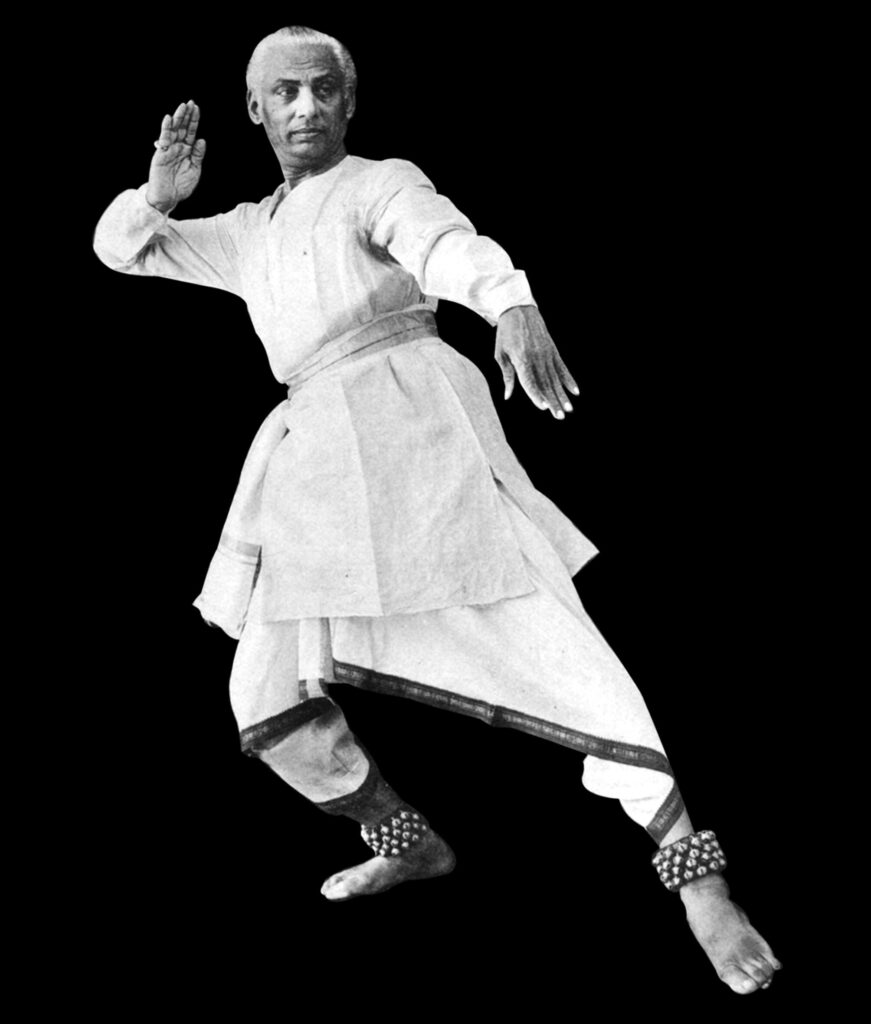
With changing times, Kuchipudi entered a contemporary phase. The all-night village performances gradually gave way to presentations designed for the proscenium stage, making the art form more accessible to urban and international audiences. As Kuchipudi travelled beyond the boundaries of Andhra Pradesh and India, a few visionary gurus reshaped and refined the tradition, giving it a renewed identity and wider recognition.
Among the foremost contributors to this transformation were Guru Vempati Chinna Satyam, Guru Vedantam Rattaih Sharma, Guru Vasanthalakshmi Narasimha Charyulu, Guru Jayarama Rao, Guru C. R. Acharyulu and many others. Equally significant were pioneering women performers such as Indrani Rahman, Yamini Krishnamurthy, Uma Rama Rao, Shobha Naidu, and Kamala Reddy, whose achievements inspired generations of young dancers and demonstrated the immense artistic potential of women in Kuchipudi.
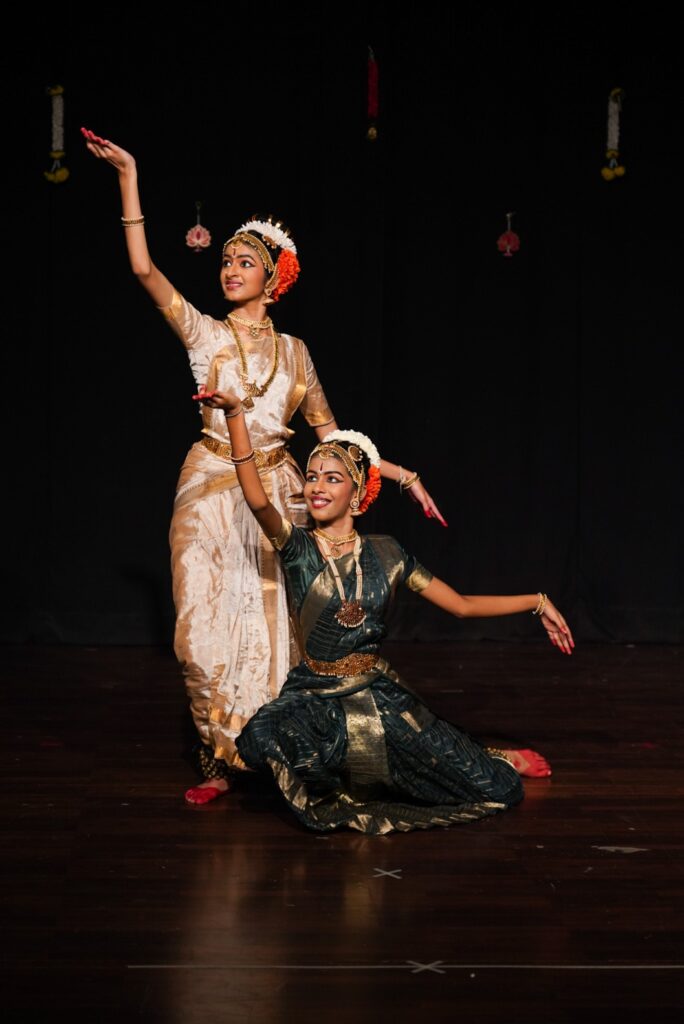
Today, Kuchipudi is practiced and performed across the world by artists from diverse cultural and social backgrounds. What began as a hereditary male-oriented dance-drama tradition has evolved into a globally celebrated classical dance form. While preserving its traditional repertoire and aesthetic principles, the art has successfully adapted to changing times through solo presentations, dance ballets, and innovative choreographic productions. Yet, at its core, Kuchipudi remains a vibrant expression of storytelling, devotion, rhythm, and theatrical excellence.
References:
- Kuchipudi Gurus, Performers and Performance Traditions, by M. Nagabhushana Sarma.
- Traditions of Indian Classical Dance, by Mohan Khokar.
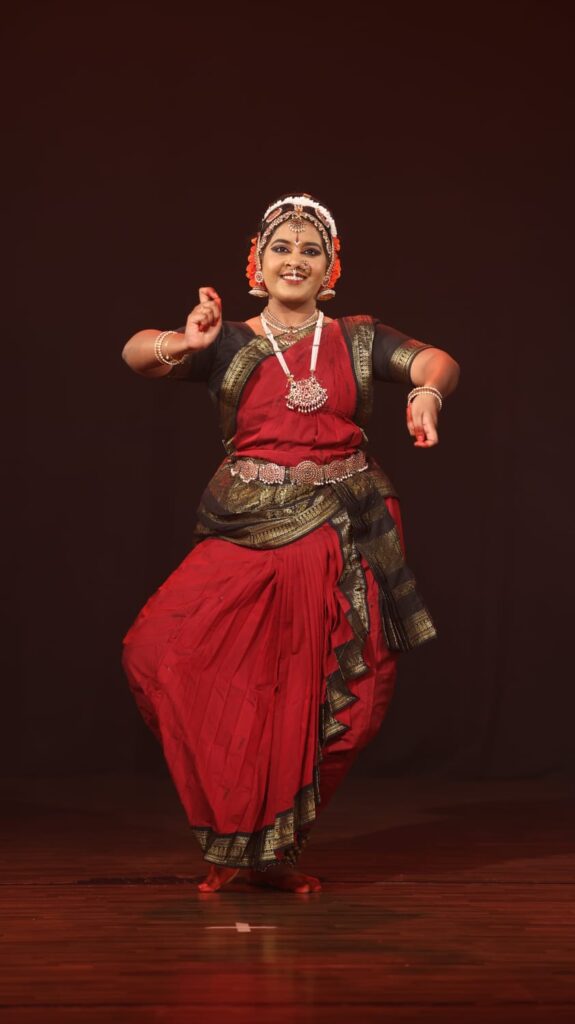
Meghana Barma is a performer in Kuchipudi for the 18 years and has given performances both national and international. To understand dance more deeply beyond performance and to further nurture her skills into Dance Education, she’s presently pursuing Masters from the University of Hyderabad.
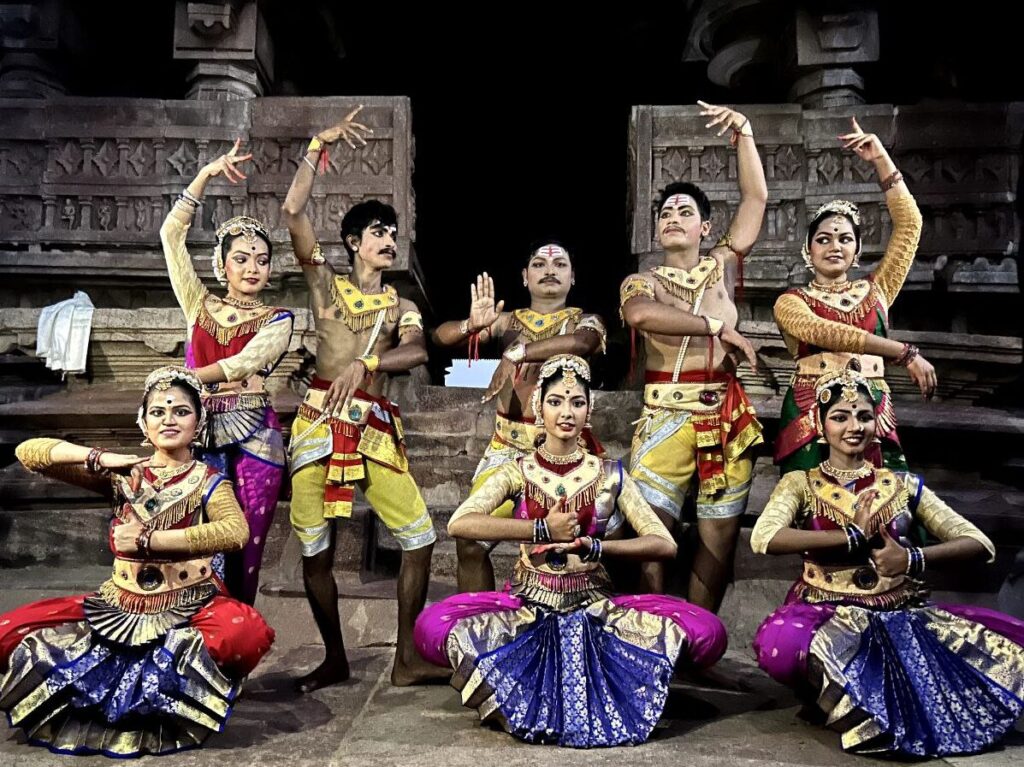
Mana Sanskriti mana kalalu
🙏❤️