Introduction
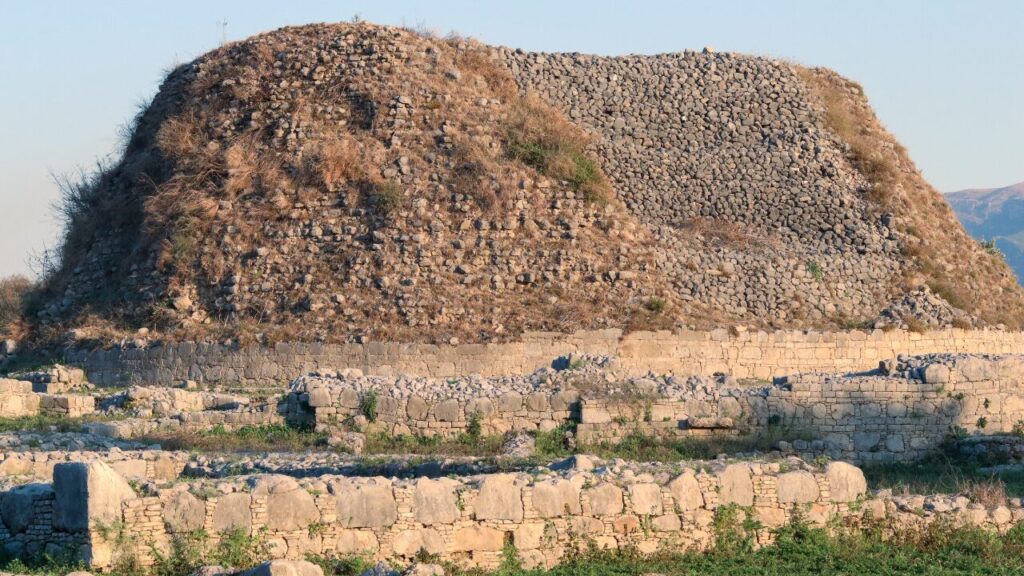
Takshashila (Taxila) was an ancient city in Gandhara (modern-day Pakistan) that flourished from the 6th century BCE to the 5th century CE. It was located at the intersection of major trade routes, including those linked to the Silk Road, connecting regions such as China, Persia, and the western world. Owing to this position, it developed into an important centre of learning, culture, and commerce. According to UNESCO, Taxila reached its peak between the 1st and 5th centuries CE and is recognised as one of the most significant archaeological sites in Asia.[1] It attracted students and scholars from different regions, and subjects such as medicine, mathematics, Buddhist philosophy, and statecraft were studied there.[2]
Takshashila is associated with figures such as Chanakya (Kautilya), Panini, Charaka, and Jivaka, representing diverse intellectual traditions[3]. The archaeological remains of Taxila, now a UNESCO World Heritage Site, indicate a long-standing tradition of learning across regions.[4] This article examines Takshashila as a decentralised system of learning and a centre of interaction among knowledge traditions, focusing on its historical development, institutional structure, and role in the development of transregional intellectual networks in ancient Eurasia.
Overview
- Geography and Timeline: Takshashila emerged around 600 BCE in the Gandhara valley, north of the Indus River, and remained active until about 500 CE. It developed through three settlements, Bhir, Sirkap, and Sirsukh, corresponding to Achaemenid, Hellenistic, and Kushan phases.[5]
- Strategic Crossroads: Located along major trade routes linked to the Silk Road, Taxila connected Central Asia and the Gangetic plains through the Khyber Pass and the Royal Road. Its location enabled interaction among India, Persia, Central Asia, and China.
- Decentralised Gurukula Network: Takshashila functioned as a network of independent teachers rather than a centralised institution. Students joined individual gurus in a residential gurukula system, without a unified administration or fixed curriculum.
- Multidisciplinary Curriculum: Sources indicate that more than sixty subjects were taught at Taxila, including Vedic literature, grammar, logic, philosophy, medicine, political science, astronomy, mathematics, military science, and ethics.[6]
- International Student Body: Literary traditions associate Taxila with students from regions such as China, Persia, and Central Asia. The city attracted individuals from varied social backgrounds, and Greek accounts compare its intellectual life with that of Athens.
- Heritage Site Today: Taxila was designated a UNESCO World Heritage Site in 1980. [7]Archaeological remains at Bhir, Sirkap, and Sirsukh illustrate urban development and reflect Indian, Persian, and Hellenistic influences.
Paraṃpara (Lineage)
Takshashila’s legacy is reflected in literary traditions and historical developments over more than a millennium under successive imperial patronages.
- Ancient Textual Mentions: References appear in Hindu epics and Puranas. The Ramayana attributes its founding to Taksha, son of Bharata, while the Mahabharata mentions King Janamejaya holding court there. Buddhist texts such as the Jataka tales and Vinaya present Takshashila as a centre of learning during the Buddha’s time.[8]
- Achaemenid Period (518–327 BCE): Around 518 BCE, Taxila came under the Achaemenid Empire under Darius I. As a frontier satrapy, it adopted Persian administration and the Aramaic script while retaining autonomy through coinage and local institutions. This period strengthened links with Mediterranean trade networks.
- Greek and Indo-Greek Era (326–100 BCE): In 326 BCE, Alexander entered Taxila with King Ambhi’s support. Under Indo-Greek rulers such as Demetrius (c. 180 BCE), the settlement coexisted with Hellenistic Sirkap. Greek patronage supported both their institutions and Buddhist establishments, contributing to Gandharan art combining Greek and Buddhist elements.[9]
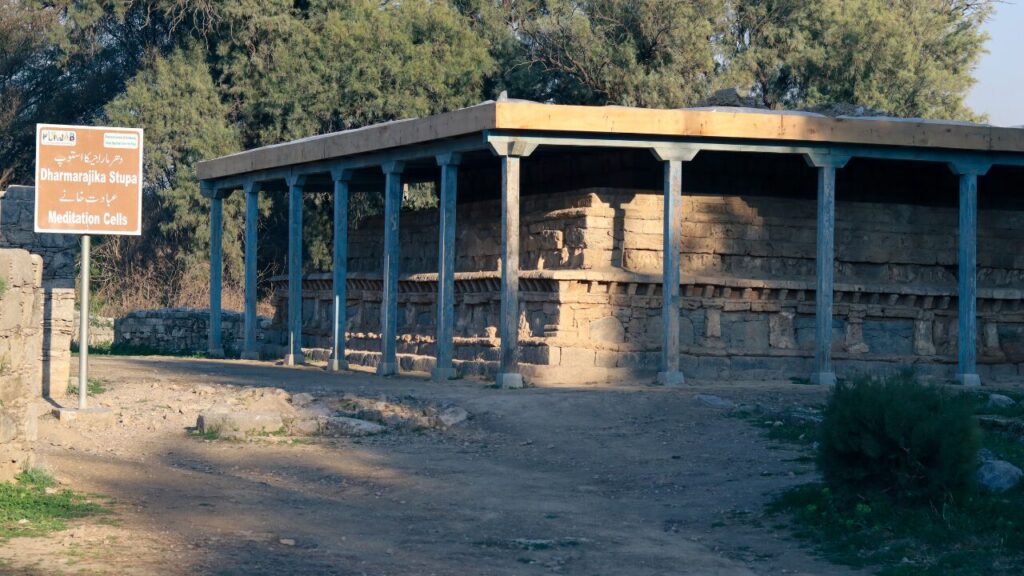
- Mauryan Period (3rd century BCE): By the 3rd century BCE, Taxila became part of the Mauryan Empire under Chandragupta. Chanakya is traditionally associated with the region as a teacher. Ashoka later governed from Taxila and supported stupas such as Dharmarajika and Buddhist monastic institutions.[10]
- Kushan Era (1st–3rd century CE): During the 1st and 2nd centuries CE, the Kushan Empire unified Gandhara. Rulers such as Kanishka patronised Buddhist art and education. Monastic complexes at Jaulian and Mohra Moradu expanded, and Taxila contributed to the transmission of Buddhist ideas to East Asia.
- Decline (5th century CE): In the 5th century CE, invasions by the Central Asian Huna led to Taxila’s decline. During Mihirakula’s reign, many institutions were destroyed.[11] Elements of its intellectual traditions continued through texts and lineages associated with Chanakya, Panini, and Charaka.
Dhṛṣṭi (Viewpoint)
Takshashila reflects important civilisational ideas related to learning and vidyā (knowledge). Its traditions indicate a pluralistic and inclusive approach to knowledge:
- Inclusivity of Knowledge: At Takshashila, multiple disciplines were studied without rigid separation, including Vedic philosophy, logic, grammar, Buddhist teachings, statecraft, and medicine. There is evidence of interaction between local and external traditions, including Greek science and Persian astronomy. Sources also suggest that access to learning was not entirely restricted by economic status.
- Guru–Śiṣya Ethos: Knowledge transmission was organised through the guru–śiṣya paramparā, with students living with teachers and learning through close interaction. The process emphasised dialogue, reflection, and disciplined practice rather than memorisation, often described through śravaṇa, manana, and nididhyāsana.
- Knowledge as Dharma: In the Indian intellectual tradition, the pursuit of vidyā is closely linked with dharma. At Takshashila, education combined ethical, practical, and intellectual dimensions, reflecting a worldview in which worldly activity (vyavahāra) and higher knowledge (brahma) were interconnected.
Laukikaprayojana (Contemporary Relevance)
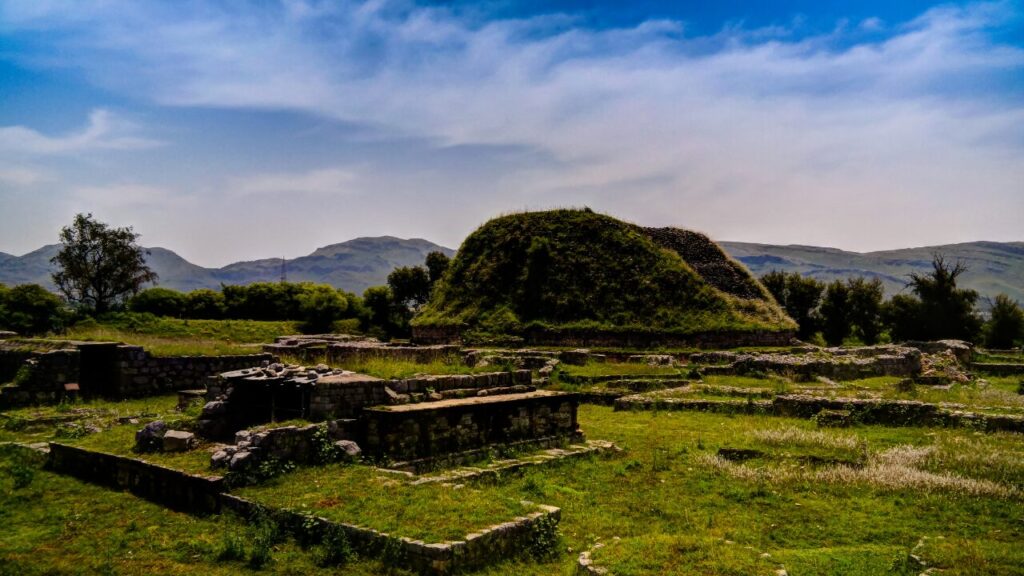
- Heritage and Tourism: As a UNESCO World Heritage Site, Taxila highlights the long-standing educational traditions of South Asia. Its excavations and museum collections provide evidence of the material culture of learning and support cultural tourism, research, and academic collaboration.
- Model for International Education: In the context of expanding global education systems, Takshashila is often seen as an early example of international learning. The interdisciplinary emphasis in India’s National Education Policy (NEP) 2020 reflects similarities with the range of subjects associated with Taxila. Modern study-abroad programmes can also be related to earlier patterns of student mobility linked to such centres.
- Cross-Border Dialogue: Takshashila, located in present-day Pakistan, remains part of the shared historical heritage of the Indian subcontinent. Such sites can encourage cultural dialogue and cooperation in heritage preservation. Institutions like the Taxila Institute of Asian Civilisations at the National University of Islamabad continue to engage with this legacy.
- Applied Learning: The integration of theoretical knowledge and practical training at Taxila finds parallels in contemporary approaches to applied learning. Charaka and Jivaka are frequently referenced in discussions of medical education.
- Inclusive Knowledge Systems: Takshashila operated without strict centralised control, with scholars retaining autonomy within a patronage-based framework. This remains relevant to contemporary discussions on decentralised, culturally grounded models of education.
Key Concepts / Terminology
| Term | Meaning / Definition |
| Vidyā (विद्या) | Knowledge; the sacred pursuit of learning in Indian tradition. |
| Gurukula (गुरुकुल) | Traditional residential school where students live with and serve the teacher (guru). |
| Guru–Śiṣya Paramparā | The lineage of teacher-to-disciple transmission of knowledge across generations. |
| Arthashastra (अर्थशास्त्र) | Chanakya’s treatise on statecraft, economic policy, and military strategy. |
| Ashtadhyayi (अष्टाध्यायी) | Panini’s definitive grammar of Sanskrit, composed in eight chapters. |
| Dharma (धर्म) | Cosmic order, righteous duty; the moral and spiritual framework of life. |
| Pramāṇa (प्रमाण) | Means of valid knowledge (perception, inference, verbal testimony). |
| Śabda-pramāṇa | Verbal testimony (authentic teaching) as a valid means of knowledge. |
| Ayurveda (आयुर्वेद) | Traditional Indian system of medicine; the ‘science of life’. |
| Gandhara (गान्धार) | Ancient region corresponding to modern northwest Pakistan/Afghanistan; cultural crucible of Taxila. |
| Parampara (परम्परा) | Tradition; the unbroken chain of transmission from teacher to student. |
| Dhṛṣṭi (दृष्टि) | Viewpoint; the unique Indian perspective. |
Notable Examples / Case Studies
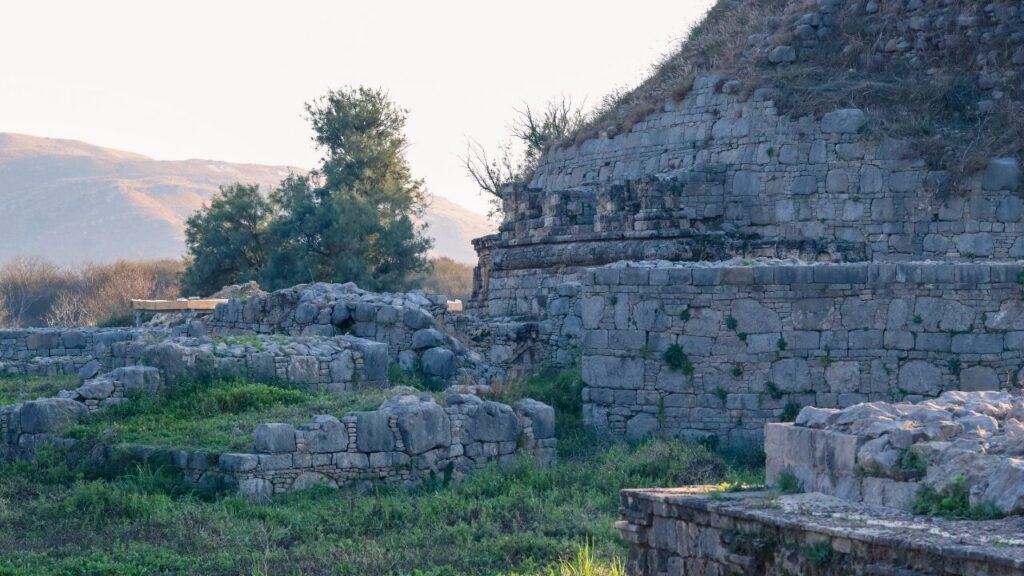
Chanakya (Kautilya): Master of Statecraft
Chanakya (c. 350–275 BCE) is traditionally associated with Takshashila, where he is believed to have studied and later taught. He trained Chandragupta Maurya, founder of the Mauryan Empire. His treatise, the Arthashastra, composed in this intellectual setting, is a major work on political economy and governance in ancient India.
Book II discusses taxation, trade regulation, and administration (Kangle, 1965, Book II, Chapters 1–35).[12] Book I outlines the duties of a ruler, while Books VII–XIV address foreign policy, intelligence, and warfare. The text continues to be studied in political science and management.
Panini: Codifier of Sanskrit Grammar
Panini (c. 4th century BCE) is associated with Takshashila, where he is believed to have composed the Ashtadhyayi. This text consists of 3,976 sutras arranged into eight chapters and is one of the earliest formal grammatical systems.
The first chapter, the Samjnadhyaya, defines technical terms, while later chapters develop a rule-based system for generating Sanskrit forms[13] (Cardona, 1976). Its analytical precision has been compared with modern linguistics, including formal language theory and computational linguistics. It remains influential in Sanskrit studies and Indic script standardisation, including Unicode.
Charaka and Jivaka: Pioneers of Medicine
Charaka is associated with the medical tradition linked to Takshashila. His work, the Charaka Samhita, contains 120 chapters in eight sections and systematises principles of Ayurveda, diagnosis, and pharmacology. Sutra Sthana, Chapter 11 discusses medical ethics and the duties of a physician[14] (Sharma, 1992).
Jivaka, a royal physician at the Magadha court and associated with the Buddha, is described in Pali texts as having studied at Takshashila.[15] He is presented as skilled in surgery and internal medicine and credited with performing complex medical procedures.
Prasenajit: Student King
Prasenajit, King of Kosala and a contemporary of the Buddha, is mentioned in Pali texts as having studied at Takshashila.[16] His association indicates that ruling elites were linked with such centres of learning and reflects the institution’s wider reputation and diverse student body.
सम्बन्धित श्लोक: Sambaddhita Ślokaḥ (Related Shlokas)
On the Unity of Knowledge
एकं सद्विप्रा बहुधा वदन्ति
Ekaṃ sad viprā bahudhā vadanti
“Truth is one; the wise speak of it in many ways.”
— Rigveda 1.164.46
This verse reflects the intellectual openness associated with Takshashila. It suggests an approach that was receptive to knowledge from different traditions, including Greek, Persian, Chinese, and Central Asian sources, and viewed these varied perspectives as expressions of a shared underlying truth.
On the Pursuit of Knowledge
विद्या ददाति विनयं विनयाद् याति पात्रताम्।
पात्रत्वात् धनमाप्नोति धनात् धर्मं ततः सुखम्।।
Vidyā dadāti vinayaṃ vinayād yāti pātratām |
Pātratāt dhanam āpnoti dhanāt dharmaṃ tataḥ sukham ||
“Knowledge gives humility; from humility comes worthiness; from worthiness one gains wealth; from wealth, righteousness; and from righteousness, happiness.”
— Hitopadeśa
This shloka reflects the ideal at Takshashila that education was not limited to professional training but was understood as a broader process of personal development. It emphasises the cultivation of humility, character, and alignment with dharma.
Siddhānta (Theoretical Framework)
- Networked Education: Takshashila functioned as a network of learning centres rather than a single central university. Each discipline had its own paṭhaśāla, connected by the city’s wider intellectual life.
- Guru-System Continuity: The guru–śiṣya model shows decentralised knowledge transmission. Oral teaching, close teacher–student interaction, and the authority of Śabda-pramāṇa and anubhava were central.
- Intercultural Synthesis: Taxila brought together Vedic, Buddhist, and Greek influences. This shows that different traditions could coexist and interact within a shared intellectual space.
- Secular and Sacred Harmony: Political economy, grammar, ethics, and philosophy were studied together. This reflects an integrated view of worldly and higher knowledge.
- Adaptive Innovation: The use of Kharosthi from Aramaic and Greek artistic elements in Buddhist structures shows openness to external influence. These were absorbed within local cultural frameworks.
टीका (Ṭīkā): Commentary
The following commentary presents scholarly interpretations and debates surrounding Takshashila. A neutral tone is maintained, and all claims are attributed to sources.
1. Was Takshashila a ‘University’ in the Modern Sense?
A key debate concerns whether Takshashila can be termed a university. A.S. Altekar (1944) considers this anachronistic due to the absence of a single campus, degree system, formal enrolment, or central administration.[17]
Romila Thapar (2002) similarly describes it as a centre of learning.[18] In contrast, R.K. Mookerji (1947) argues that its scale, range of subjects, and international character justify the term in a broader sense.[19] This debate highlights differences between Indian and Western institutional models.
2. The Question of Caste and Access
Although sources present Takshashila as open, scholars advise caution. Patrick Olivelle (2013) notes that most recorded students were Brahmin or Kshatriya, reflecting social hierarchies.[20] Claims of egalitarian access must be balanced against varna and gender limitations, with women largely absent. This requires a more nuanced interpretation.
3. Gandharan Art: Influence or Synthesis?
Gandharan art, known for depicting the Buddha in human form using Hellenistic conventions, is often seen as a blend of Indian and Greek traditions. Anna Filigenzi (2012) argues that Greek elements were adapted for Buddhist purposes, forming a synthesis.[21] Others, including Susan Huntington, emphasise indigenous development and question the extent of Hellenistic influence. This debate shapes interpretations of Takshashila’s cosmopolitan character.
4. Takshashila and Nalanda: Complementary, Not Competing
Takshashila and Nalanda are often presented as rivals for the title of the world’s first university. Palati (2024) suggests they are better understood as complementary.[22] Takshashila represented a decentralised gurukula model with broad learning, while Nalanda was a later monastic institution focused on Buddhist philosophy.
आधुनिक उदाहरण (Ādhunika Dṛṣṭāntaḥ): Modern Examples
The following examples show how the principles of Takshashila continue to appear in contemporary Indian educational institutions and policy:
- Indian Institutes of Technology (IITs)
The IITs reflect the Takshashila model of multidisciplinary technical education and close mentor–student relations. Like the gurukula system, they combine specialised learning with direct faculty supervision. The IITs have produced scholars of global standing in engineering, science, and the humanities.
- Nalanda University Revival (2014–present)
The re-establishment of Nalanda University in Bihar in 2014 represents a revival of India’s ancient university tradition.[23] Inspired by Nalanda and institutions such as Takshashila, it offers postgraduate programmes in ecology, history, and Buddhist studies, and admits international students. It continues the idea of India as a centre for global learning. (Source: Nalanda University Act, 2010; Ministry of External Affairs, Government of India.)
- NEP 2020 and Multidisciplinary Education
India’s National Education Policy (NEP) 2020 draws on the gurukula tradition and institutions like Takshashila to promote holistic, multidisciplinary education.[24] Its emphasis on flexibility across streams, inclusion of Indian knowledge systems, and values-based learning reflects Taxila’s broad curriculum. The Institutions of Eminence (IoE) scheme aims to strengthen India’s role as a global centre of learning. (Source: NEP 2020, Ministry of Education, Government of India.)
Network Diagram: Takshashila as a Gurukula Ecosystem
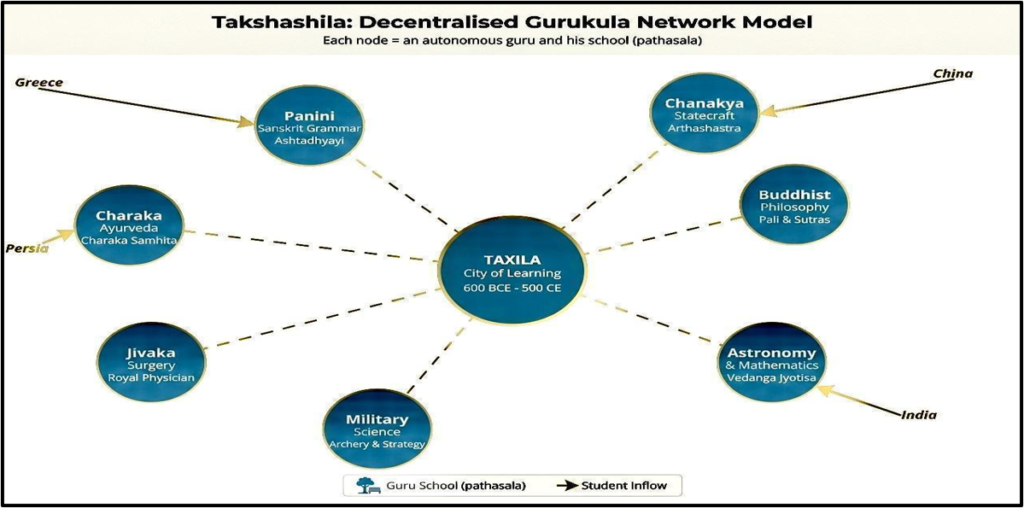
The diagram illustrates Takshashila’s decentralised network model, where each outer node represents an autonomous guru and their paṭhaśāla linked to the city as a shared intellectual centre. The gold arrows indicate the movement of international students from Greece, Persia, China, and the Indian subcontinent.
Figure 1: Takshashila’s Decentralised Gurukula Network Model
Conclusion
Takshashila was a major centre of ancient intellectual life and cross-cultural exchange. As a cosmopolitan learning city, it showed that knowledge grew through interaction among Indian, Greek, Persian, and Central Asian traditions. Its guru-centred, multidisciplinary system produced thinkers such as Panini and Chanakya, whose contributions to grammar and statecraft remained influential. Knowledge of Takshashila rests largely on textual traditions and archaeology, so many details remain debated. It should be understood in its historical context, not idealised. For modern India, it offers a model for inclusive, integrative education rooted in mentorship, ethics, and openness.
[1] UNESCO World Heritage Centre. “Taxila Nomination Dossier.” WHC, whc.unesco.org/en/list/139; Marshall, John. Taxila. 3 vols. Cambridge UP, 1951.
[2] Mookerji, R. K. Ancient Indian Education. Macmillan, 1947; Altekar, A. S. Education in Ancient India. Nand Kishore & Bros., 1944.
[3] Marshall, John. Taxila. Vol. I. Cambridge UP, 1951, pp. 12–13.
[4] UNESCO World Heritage Centre. “Taxila Nomination Dossier.” WHC, whc.unesco.org/en/list/139.
[5] Rhys Davids, T. W., trans. Buddhist Birth Stories (Jataka Tales). Trübner & Co., 1880; Horner, I. B., trans.. Pali Text Society, 1938.
[6] Thapar, Romila. Early India. Allen Lane/Penguin, 2002; Marshall, John. Taxila. Vol. I, pp. 12–16.
[7] Marshall, John. Taxila. 3 vols. Cambridge UP, 1951, Vol. I, p. 14.
[8] Thapar, Romila. Early India. Allen Lane/Penguin, 2002; Marshall, John. Taxila. Vol. I.
[9] Thapar, Romila. Early India: From the Origins to AD 1300. Allen Lane/Penguin, 2002.
[10] Kangle, R. P. The Kautiliya Arthashastra, Part II: Translation. U of Bombay, 1965. Book II, Ch. 1–35, pp. 99–178.
[11] Thapar, Romila. Early India. Allen Lane/Penguin, 2002.
[12] Kangle, R. P. The Kautiliya Arthashastra, Part II: Translation. U of Bombay, 1965. Book II, Ch. 1–35.
[13] Cardona, George. Panini: His Work and Its Traditions. Motilal Banarsidass, 1976.
[14] Sharma, P. V. History of Medicine in India. Indian National Science Academy, 1992; Charaka Samhita, Sutra Sthana, Ch. 11.
[15] Horner, I. B., trans. The Book of the Discipline (Vinaya Pitaka). Pali Text Society, 1938.
[16] Rhys Davids, T. W., trans. Buddhist Birth Stories (Jataka Tales). Trübner & Co., 1880.
[17] Altekar, A. S. Education in Ancient India. Nand Kishore & Bros., 1944, p. 12.
[18] Mookerji, R. K. Ancient Indian Education. Macmillan, 1947, p. 478.
[19] Mookerji, R. K. Ancient Indian Education. Macmillan, 1947.
[20] Olivelle, Patrick, trans. King, Governance, and Law in Ancient India: Kautilya’s Arthasastra. Oxford UP, 2013.
[21] Filigenzi, Anna. Art and Architecture of Ancient Gandhara. Carocci Editore, 2012.
[22] Palati, V. “Nalanda and Takshashila: The Ancient Universities that Educated the World.” Indian Streams Research Journal, 2024.
[23] Nalanda University Act. 2010; Ministry of External Affairs, Government of India, nalandauniv.edu.in.
[24] Ministry of Education, Government of India. National Education Policy 2020. www.education.gov.in/nep/about-nep.
Varun Kumar is a Post Graduation student of History at DAV College, Amritsar, Punjab. His research interests include ancient Indian history, intellectual history, and historiography. He aspires to pursue doctoral research and contribute to the field of historical scholarship.